![Tire and auto repair services at D’s Tire & Auto in [Location].](https://spcdn.shortpixel.ai/spio/ret_img,q_cdnize/dsautorepairs.com/wp-content/uploads/2026/04/Ds-Auto-Repair-Logo-1.png)

Why Won’t My Vehicle Start?
Few things are more frustrating than getting into your vehicle, turning the key or pressing the start button, and hearing… nothing.
Maybe the engine cranks but refuses to fire up. Maybe you hear a rapid clicking noise. Perhaps the dashboard lights come on, but the engine stays silent. No matter the situation, a vehicle that won’t start can quickly disrupt your day and leave you wondering what went wrong.
The good news is that a no-start condition is often caused by a handful of common issues. Understanding what those issues are can help you recognize warning signs early and know when it’s time to seek professional help.
Let’s take a look at some of the most common reasons a vehicle refuses to start and what you can do about them.
The Starting Process Is More Complex Than You Think
Starting a modern vehicle may seem simple from the driver’s seat, but several systems must work together perfectly for the engine to come to life.
Your battery must provide sufficient power. The starter motor has to engage properly. Fuel needs to reach the engine. The ignition system must create spark. Sensors and computers need to communicate accurately.
If even one part of this process fails, your vehicle may not start.
That’s why diagnosing a no-start issue often requires a systematic approach rather than guessing and replacing parts.
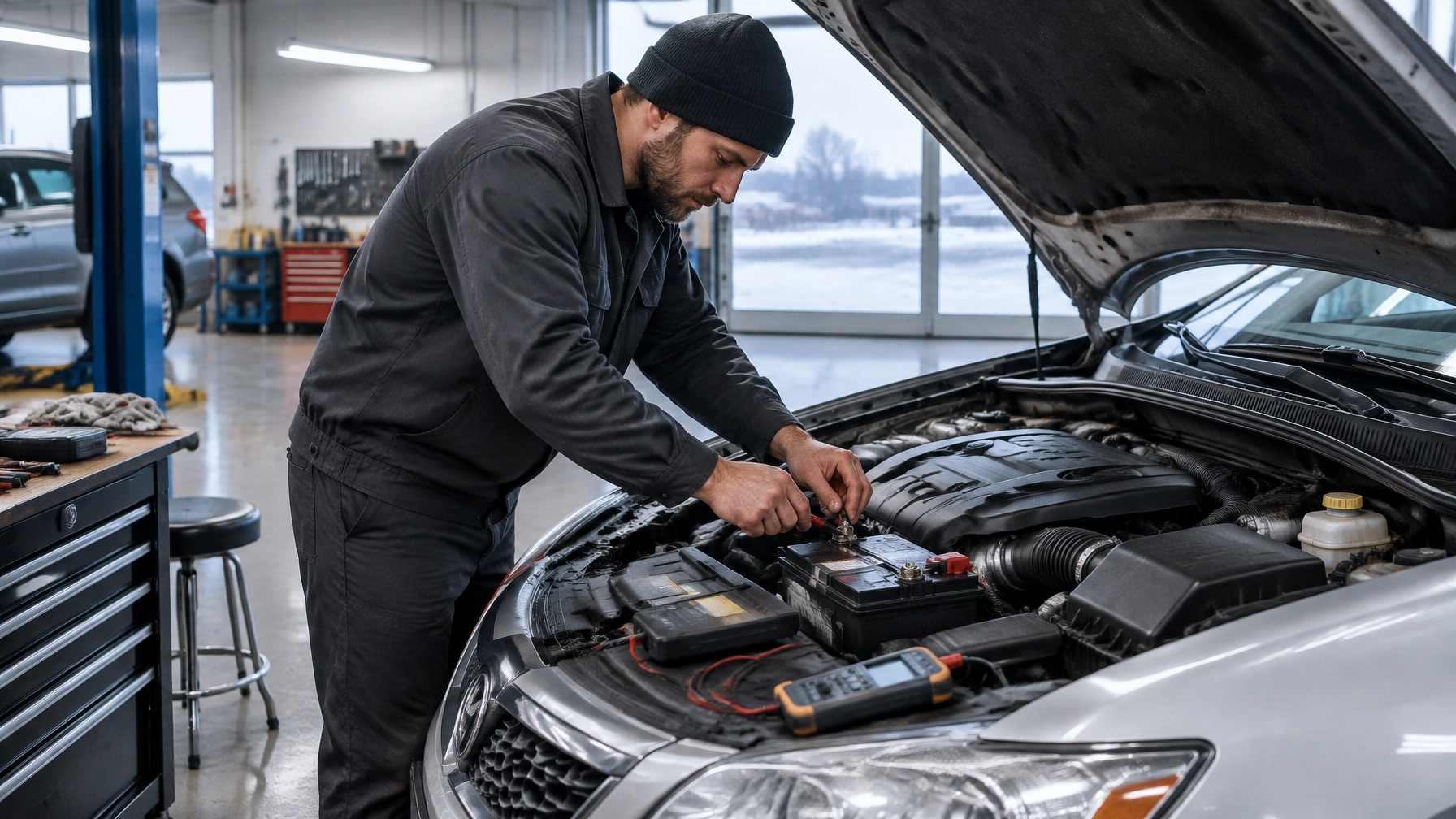
A Dead or Weak Battery
The most common reason a vehicle won’t start is a dead or weak battery.
Your battery provides the electrical power needed to start the engine. Over time, batteries naturally lose their ability to hold a charge. Extreme temperatures, age, and frequent short trips can accelerate battery wear.
Common signs of a weak battery include:
- Slow engine cranking
- Clicking noises when turning the key
- Dim headlights
- Electrical accessories operating sluggishly
- Dashboard lights flickering
Many vehicle batteries last between three and five years under normal conditions. If your battery is approaching that age range, it may be nearing the end of its service life.
A professional battery test can quickly determine whether your battery is still healthy or needs replacement.
Corroded or Loose Battery Connections
Sometimes the battery itself is perfectly fine.
The real problem may be corrosion or loose connections at the battery terminals.
Battery corrosion appears as a white, blue, or green powdery substance around the terminals. This buildup can interfere with the flow of electricity between the battery and the vehicle.
Loose connections can create similar symptoms.
You may notice:
- Intermittent starting problems
- Clicking sounds
- Loss of electrical power
- Unpredictable behavior from vehicle electronics
Cleaning and tightening battery connections may restore proper operation, but if corrosion has caused damage, replacement components may be necessary.
A Failing Starter Motor
The starter motor is responsible for physically turning the engine when you start the vehicle.
If the starter fails, the battery may have plenty of power, but the engine won’t crank.
Common symptoms of starter problems include:
- A single click when attempting to start
- No engine cranking
- Intermittent starting issues
- Grinding noises during startup
Starter motors experience wear over time because they endure significant stress every time the vehicle starts.
In many cases, starter failure develops gradually. You may notice occasional difficulty starting before complete failure occurs.
Problems With the Alternator
Many drivers assume that if their vehicle starts, the battery must be healthy. However, the alternator plays a major role in keeping the battery charged.
The alternator generates electricity while the engine is running and replenishes the battery’s charge.
If the alternator begins to fail, the battery may slowly lose power until there isn’t enough energy left to start the vehicle.
Warning signs of alternator problems include:
- Battery warning lights
- Dim headlights
- Electrical issues
- Strange noises from under the hood
- Frequent dead batteries
A vehicle that repeatedly needs jump starts may have an alternator problem rather than a battery problem.
Fuel Delivery Issues
An engine needs fuel to run. If fuel cannot reach the engine, starting becomes impossible.
Several components work together to deliver fuel properly, including:
- Fuel pump
- Fuel injectors
- Fuel filter
- Fuel lines
A failing fuel pump is one of the more common causes of fuel delivery issues.
Signs of fuel system problems may include:
- Engine cranking without starting
- Difficulty starting after sitting overnight
- Loss of power while driving
- Engine sputtering
- Stalling
Fuel system problems often require professional diagnostic equipment to identify accurately.
Ignition System Failures
The ignition system creates the spark that ignites the air-fuel mixture inside the engine.
Without spark, combustion cannot occur.
Important ignition components include:
- Spark plugs
- Ignition coils
- Ignition control modules
- Wiring and connectors
As spark plugs wear, starting may become more difficult. Ignition coils can also fail over time, preventing spark from reaching one or more cylinders.
You might notice symptoms such as:
- Rough running
- Misfires
- Reduced fuel economy
- Difficulty starting
- Check engine light illumination
Routine maintenance helps keep the ignition system functioning properly and reduces the likelihood of unexpected breakdowns.
A Faulty Fuel Pump Relay or Fuse
Modern vehicles rely on numerous relays and fuses to control electrical systems.
A blown fuse or faulty relay can prevent the fuel pump, ignition system, or starter from operating correctly.
While these components are relatively inexpensive, identifying the specific cause can sometimes be challenging because symptoms often resemble larger mechanical problems.
This is one reason professional diagnostics are so valuable. Technicians can quickly test circuits and pinpoint the actual source of the issue.
Security System Problems
Many modern vehicles include anti-theft systems designed to prevent unauthorized starting.
Occasionally, these systems can malfunction or fail to recognize the key or key fob.
Possible signs include:
- Security warning lights
- Engine cranking briefly then shutting off
- Complete no-start conditions
- Messages displayed on the dashboard
A weak key fob battery can sometimes contribute to these problems as well.
If you suspect a security system issue, consulting a qualified technician is often the fastest solution.
Engine Sensor Failures
Today’s vehicles depend on a network of sensors that constantly monitor engine performance.
Certain sensors play a direct role in starting the engine.
Examples include:
- Crankshaft position sensor
- Camshaft position sensor
- Mass airflow sensor
- Engine coolant temperature sensor
If these sensors provide incorrect information or stop working entirely, the engine control module may prevent the engine from starting.
Sensor failures can be difficult to diagnose without specialized equipment because symptoms often overlap with other mechanical issues.
Running Out of Fuel
It may sound obvious, but it happens more often than many drivers would like to admit.
Faulty fuel gauges, busy schedules, and simple distractions can sometimes leave a vehicle with less fuel than expected.
Before assuming a major mechanical failure, verify that the vehicle actually has fuel in the tank.
Sometimes the simplest explanation is the correct one.
What Should You Do If Your Vehicle Won’t Start?
If your vehicle refuses to start, stay calm and pay attention to the symptoms.
Ask yourself:
- Do the dashboard lights come on?
- Does the engine crank?
- Do you hear clicking noises?
- Have there been any recent warning lights?
- Has the vehicle shown signs of trouble recently?
These observations can provide valuable clues when discussing the problem with a technician.
Avoid repeatedly attempting to start the vehicle if it clearly isn’t responding. Continued attempts can drain the battery and potentially complicate the diagnosis.
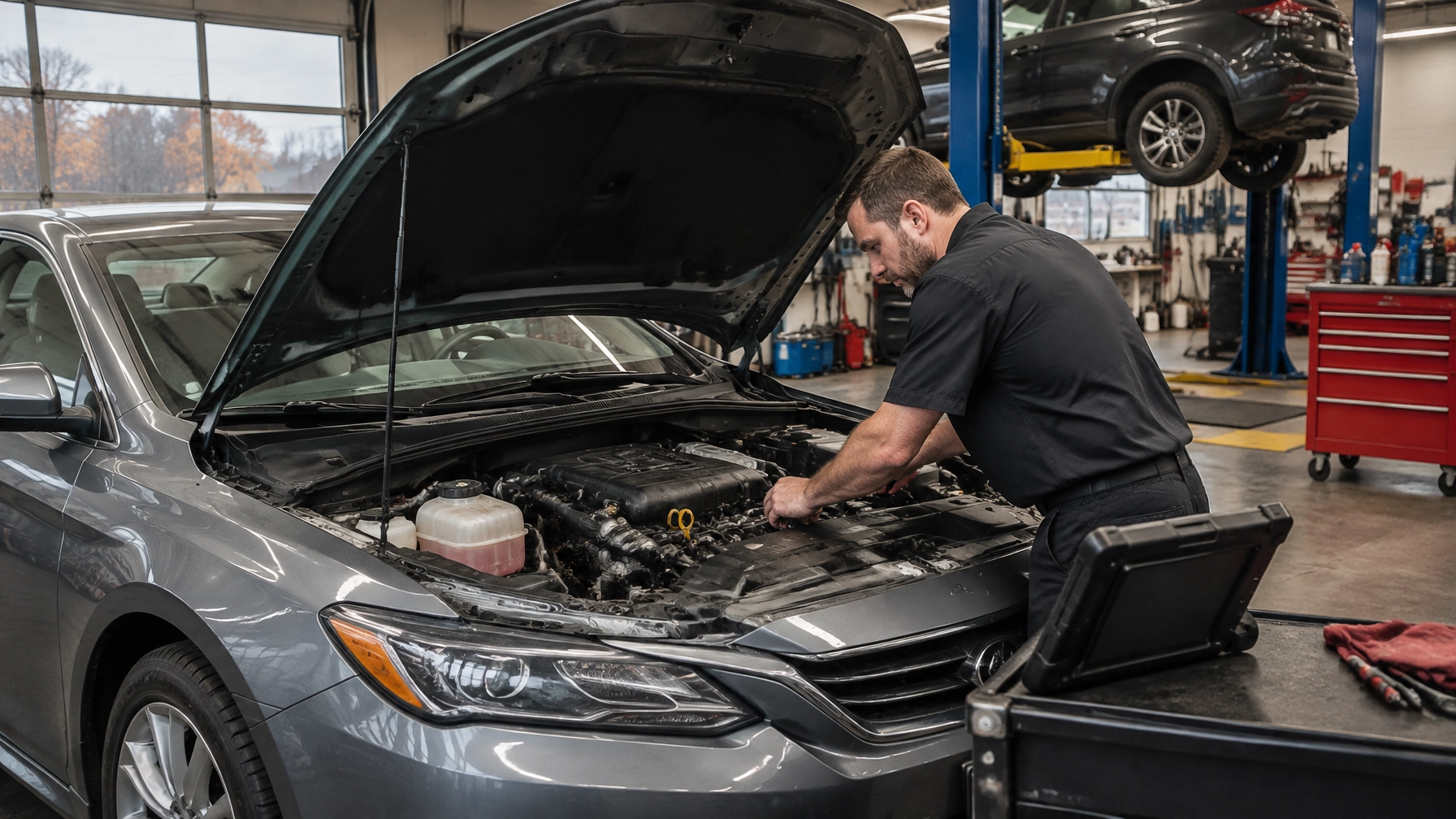
Why Professional Diagnostics Matter
One of the biggest mistakes vehicle owners make is assuming they know exactly what’s wrong based on a symptom alone.
For example, a vehicle that won’t start may seem like it has a dead battery, but the real culprit could be the alternator, starter, fuel system, or a faulty sensor.
Modern vehicles contain complex electronic systems that often require advanced diagnostic tools to evaluate properly.
Professional technicians can test components systematically, identify the root cause, and recommend the correct repair the first time.
This approach saves time, reduces frustration, and helps prevent unnecessary parts replacement.
A vehicle that won’t start is never convenient, but it doesn’t have to become a major ordeal. Whether the problem is a weak battery, failing starter, fuel system issue, or something more complex, identifying the cause early can help prevent larger repairs and get you back on the road sooner.
At D’s Tire & Auto, our experienced technicians have been helping Missouri drivers solve vehicle problems for more than 30 years. As a NAPA-certified repair shop with locations in Willard, Kimberling City, Golden City, Central Springfield, and North Springfield, we have the tools, training, and expertise to diagnose starting problems accurately and efficiently.
If your vehicle won’t start, don’t waste time guessing. Contact D’s Tire & Auto today to schedule a professional diagnostic inspection. We’ll identify the issue, explain your options clearly, and help get your vehicle running reliably again.