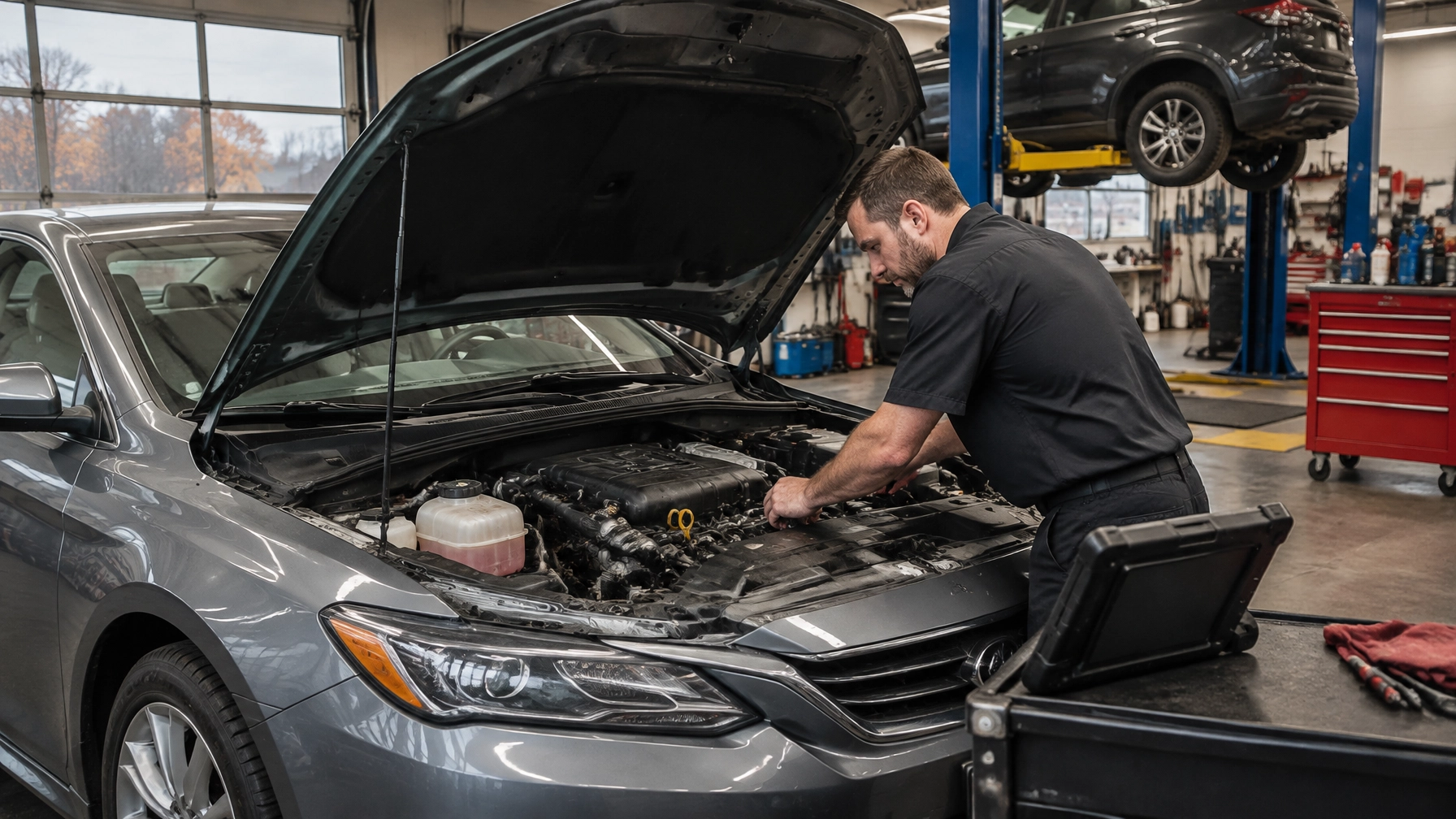
A cold Missouri morning, a quiet engine, and a car that won’t start can throw your whole day off. A weak battery is a common possibility, but alternator problems, loose connections, and other issues can cause similar symptoms. So how can you tell what’s behind the no-start?
The short answer: warning signs can point you in a direction, but a test is more dependable than a guess. Here’s what to look for, what a basic battery check can tell you, and what happens during a professional electrical system diagnosis.
Start with the symptoms, but treat them as clues
Your vehicle’s battery supplies power to start the engine. Once the engine is running, the alternator helps power the electrical systems and recharge the battery. Because these parts work together, a fault in either one can leave you with a dead or struggling vehicle.
Pay attention to what happens when you turn the key or press the start button:
- Slow cranking (the engine turns over sluggishly) can point to a weak battery or a poor connection.
- Rapid clicking or dim dashboard lights may mean the battery doesn’t have enough power to start the engine.
- A battery or charging warning light while driving, dimming lights, or electrical accessories acting strangely can signal a charging-system issue.
- Normal cranking without the engine starting may point to something other than the battery or alternator, such as a fuel, ignition, or sensor problem.
These are useful observations to share with a technician, but they don’t confirm which part has failed. A worn battery can cause electrical symptoms, and a failing alternator can leave a good battery discharged. Our guide to other common reasons a vehicle won’t start covers a few more possibilities.
How cold mornings can expose a weak battery
A battery has a tougher job in cold weather. Low temperatures slow the chemical process that produces electrical power, while the engine may need more effort to turn over. If the battery was already aging or undercharged, the first cold snap can make the weakness obvious.
That doesn’t automatically mean the alternator has failed. A battery may struggle after a cold night and then start normally later, while a charging-system problem may leave it short of power again after you’ve driven. A pattern of repeated trouble is a reason to test both systems rather than replace parts based on the weather alone.
If your car is slow to start, take note of whether the problem happens after the vehicle sits overnight, whether the lights look dim, and whether a warning light appears once the engine is running. Those details help narrow down the next checks.
Signs that may point to the battery
A battery issue is more likely when you notice:
- Slow cranking, especially first thing in the morning
- Clicking when you try to start
- Dim lights or weak power to accessories before the engine starts
- Corrosion or looseness around the battery connections
- A vehicle that starts with a jump but has trouble again after sitting
A jump-start can get you moving, but it doesn’t prove the battery is bad. The battery might be worn, simply discharged, or unable to receive a proper charge because of a fault elsewhere. Loose or corroded terminals and damaged cables can also interrupt the flow of power and mimic a failing battery.
Avoid repeatedly trying to start a car that isn’t responding. Repeated attempts can drain the battery further and make it harder to identify what started the problem.
Signs that may point to alternator problems
The alternator is part of your car’s charging system. When it isn’t supplying power as it should, the battery may gradually run down, even if the battery itself is in good condition.
Possible clues include:
- A battery or charging warning light while the engine is running
- Headlights or dashboard lights that dim while driving
- Electrical accessories that flicker or behave unpredictably
- A vehicle that starts after a jump but stalls or loses power soon afterward
- A battery that keeps going flat despite being charged or replaced
These symptoms still aren’t a diagnosis on their own. A belt, wiring fault, poor ground, or damaged connection can also affect charging. That’s why a reliable auto repair Missouri driver can count on starts with checking the whole system, not swapping the first part that seems suspicious.

Why a car battery test is better than a guess
A quick voltage reading can show whether a battery has a charge, but it doesn’t always show whether the battery can deliver enough power when the engine needs it. A proper car battery test checks its ability to perform under demand. The charging system should be checked too, so a weak alternator or connection doesn’t get overlooked.
Some retailers and repair shops offer a complimentary or low-cost basic battery check. That can be a helpful first step. Ask what the check includes: a simple voltage reading is not the same as a load or conductance test, and a battery-only test won’t tell you whether the alternator is charging correctly.
Testing can help you avoid buying a battery when the real issue is a connection or charging fault, or replacing an alternator when the battery has simply reached the end of its useful life. If you’re unsure what a test covers or what it costs, ask before the work begins.
What happens during a professional electrical system diagnosis?
At D’s Tire & Auto, diagnosis starts with listening to what you’ve noticed: when the vehicle struggles, whether it has needed a jump, and if any warning lights came on. Then a technician can check the parts that work together to start and power your vehicle.
Depending on the symptoms and vehicle, that may include:
- Inspecting the battery and connections. The technician looks for visible damage, corrosion, loose terminals, and cable or ground problems.
- Testing battery condition. A suitable tester checks whether the battery can supply the power needed to start the vehicle.
- Checking charging-system output. With the engine running, the technician checks whether the alternator is charging within the vehicle’s requirements.
- Looking for wiring or belt concerns. A worn belt, poor connection, or damaged wire can affect charging and may need attention.
- Checking related starting components if needed. If the battery and charging system don’t explain the symptoms, the starter or another system may need further testing.
Once we have the results, we can explain what we found and talk through practical next steps before repairs move forward. That simple, step-by-step process is designed to give you clarity and peace of mind, not leave you guessing.
Dependable help at five Missouri locations
We’re a family-owned shop with more than 30 years of experience, NAPA certification, and warranty-backed quality on qualifying work. We believe in fair pricing and honest explanations, so you can understand what your vehicle needs and why.
You can find D’s Tire & Auto in Willard, Kimberling City, Central Springfield, North Springfield, and Golden City, where the shop also handles farm equipment repair. If you’re in Springfield, you can choose the Central or North Springfield shop that’s convenient for you.
A slow start on a cold morning doesn’t tell you, by itself, whether the battery or alternator is to blame. A proper test can help find the cause and prevent unnecessary parts replacement, giving you a more dependable start and greater peace of mind. If your vehicle is giving you trouble, swing by or give your nearest D’s Tire & Auto a call. We’re ready to help you get back on the road!